Retrospective on Retro Marfa
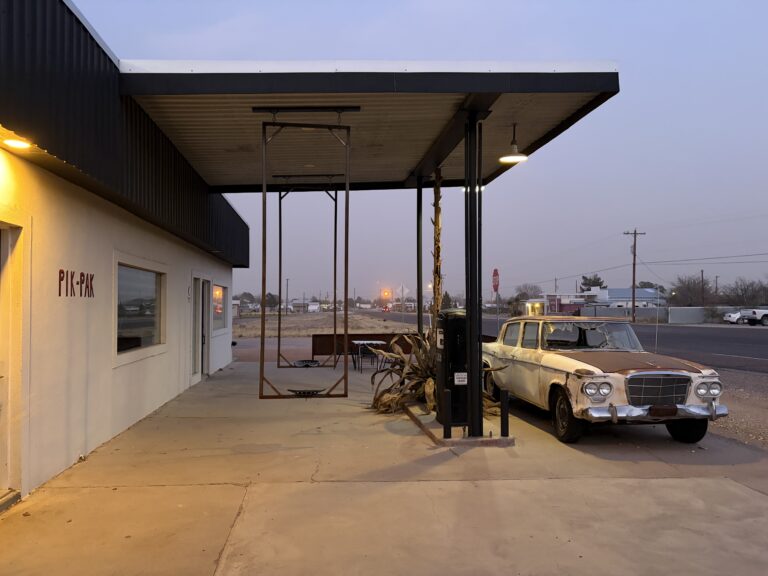
(By Steve and Dinah) Today, we left the company town of Marfa after three days of immersion in the minimalist world of Donald Judd. Company town!? Because Donald Judd single handedly put this town of 2,500 souls on the world map when he adopted it as his new home in the early 1970’s — and by the time of his death in 1996, had purchased properties with about 58 buildings and 35,000 acres of nearby Texas grasslands. Those properties are still controlled by Foundations established by Judd.
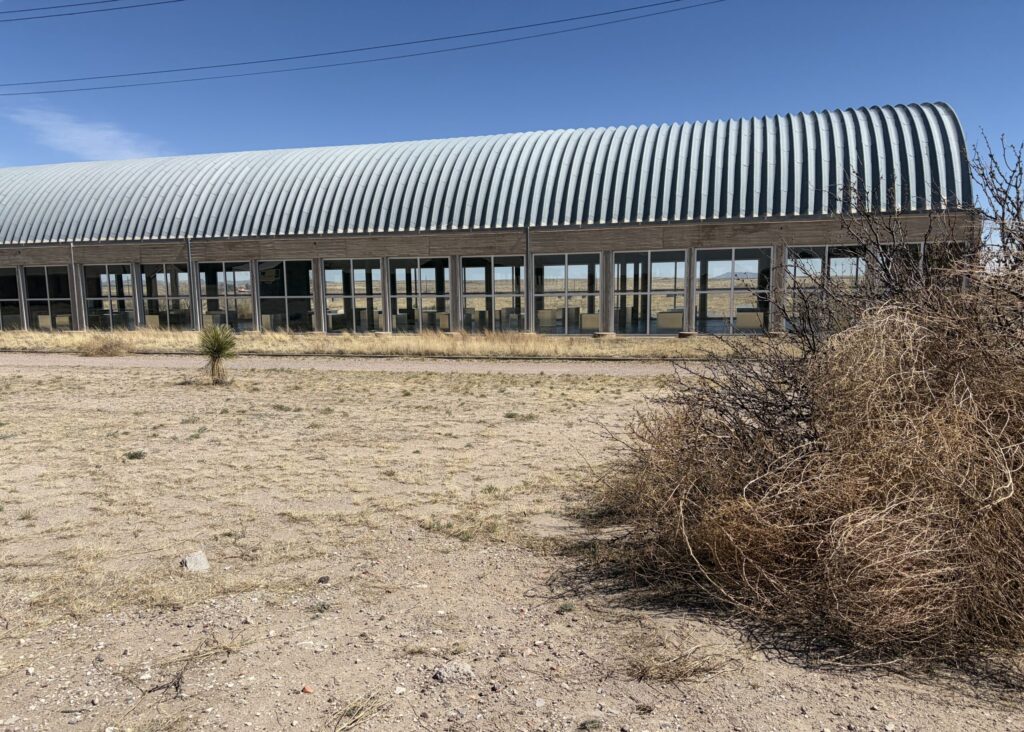
A portion of the Chinati Foundation, where 100 untitled works in mill aluminum by Donald Judd are installed in two former artillery sheds.
Marfa had been a water stop for trains, a waystation for travelers needing gas on highway 17, and then fallen into harder times. Now, it has become an Art Mecca for global art enthusiasts. As art tourism has reinvigorated the town, the previous gas stations have been nearly universally repurposed as cafes, restaurants, and retail shops but retain their original 1930’s to 1950’s feeling. The whole town carries a ‘high desert retro’ vibe.
But it’s also a bit odd in a way we can’t put our finger on. Are the very large ‘studios’ museums? An ode to Judd or his art? The tours talk more about the buildings than the art on display … and it’s not as though Judd really architected much in Marfa, outside of ‘The Block’ which was where he lived (and beautifully updated in precisely a minimal Judd manner). We understand that he was an icon. But is this world that he built around himself to live in being treated as too precious? No photos are allowed anywhere during the private tours of his home, ‘studios’, and the Chinati Foundation permanent exhibits, and frankly, 2 out of the 3 the tours felt a bit rushed with the vibe of ‘let’s get these people out of here before they accidentally touch something!’.
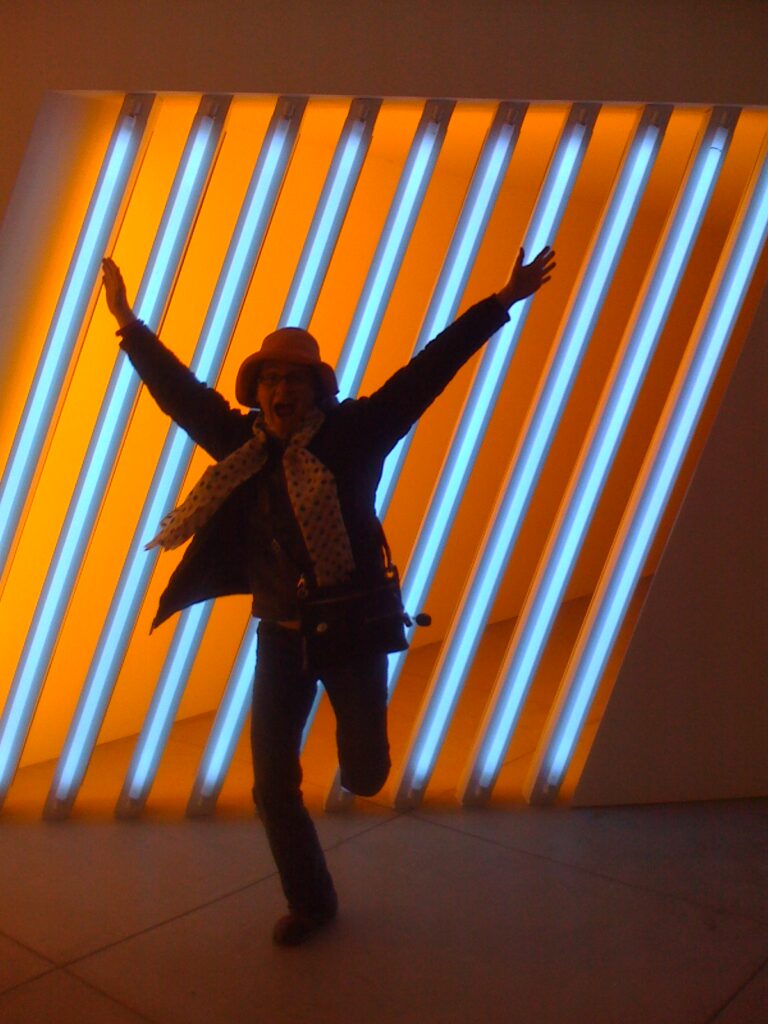
2010 “illegal” photo of Dinah in front of Dan Flavin’s untitled permanent installation in the Chinati Foundation.
On an earlier trip to Marfa in 2010 with girlfriends, Susan H. took this “illegal” photo of me in front of one of the Dan Flavin permanent installations at the Chinati Foundation. Ok, maybe I get that this kind of thing might hurt their brand image. But would it also make it more human? People walking through and interacting with the spaces feels like a critical part of experiencing the work.
Regardless, some takeaways about Judd that we enjoyed:
- Whenever he had a project that required money he wanted to do, he would go out and ‘source some money’.
- He was so thoughtful and slow in his approach in an accelerating world. He would take the time to really live with/look at pieces that he was creating or inspired by. That also included having beds in virtually every one of his spaces so that he could sleep where he worked or was ‘absorbing.
- His chairs look good but are better used as instruments of torture.
- He had a passion for restoring Texas grasslands and the 35,000 acres he purchased is now being managed by the Nature Conservancy.
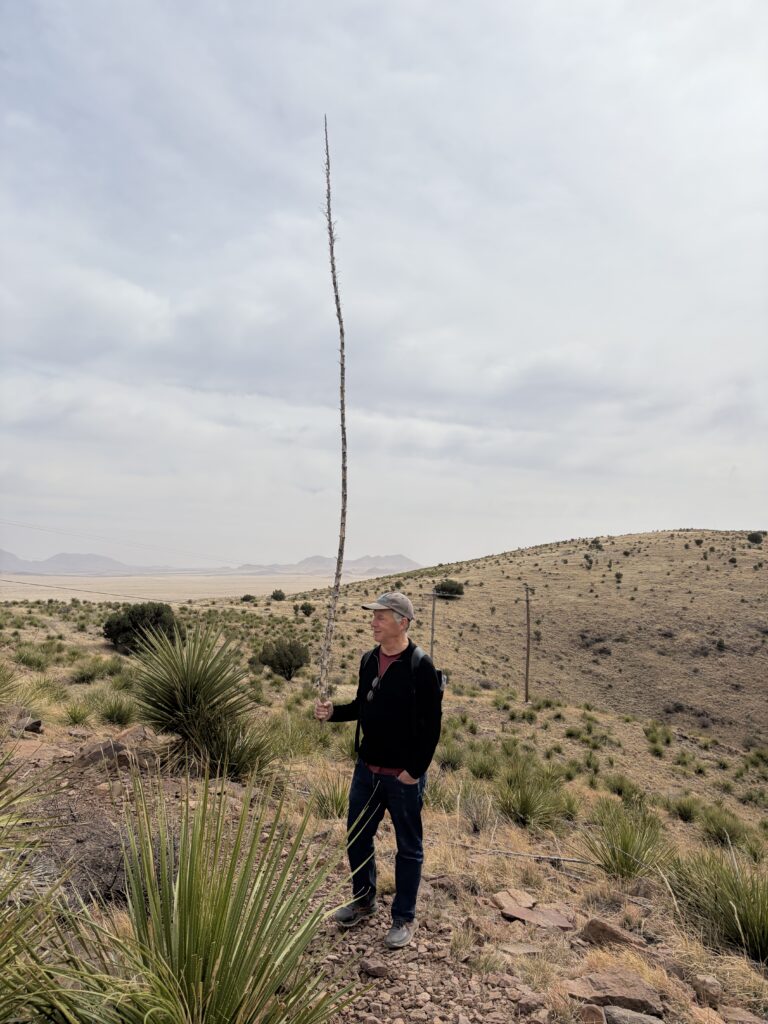
On a hike in Davis Mountains State Park.
Go to Marfa! Even if it is perhaps a bit too precious for our taste, it’s inspiring in many ways and the surrounds are beautiful as well.