Pittsburgh, “The Paris of Appalachia”?
Pittsburgh was the “big city” south of the small western Pennsylvania town I grew up in, which we rarely visited. I vaguely remember a trip we took to see the Ice Capades as a young girl, but mostly it was an untapped mystery. A more recent visit had piqued my interest (The Andy Warhol Museum, Mattress Factory, and Frick Conservatory are great), and my super nice nephew, Jono, lives there, so we definitely needed to visit. It was high time for me to update my thinking on Pittsburgh. And would we discover that Pittsburgh is the “Paris of Appalachia” as author Brian O’Neill coined in 2009?
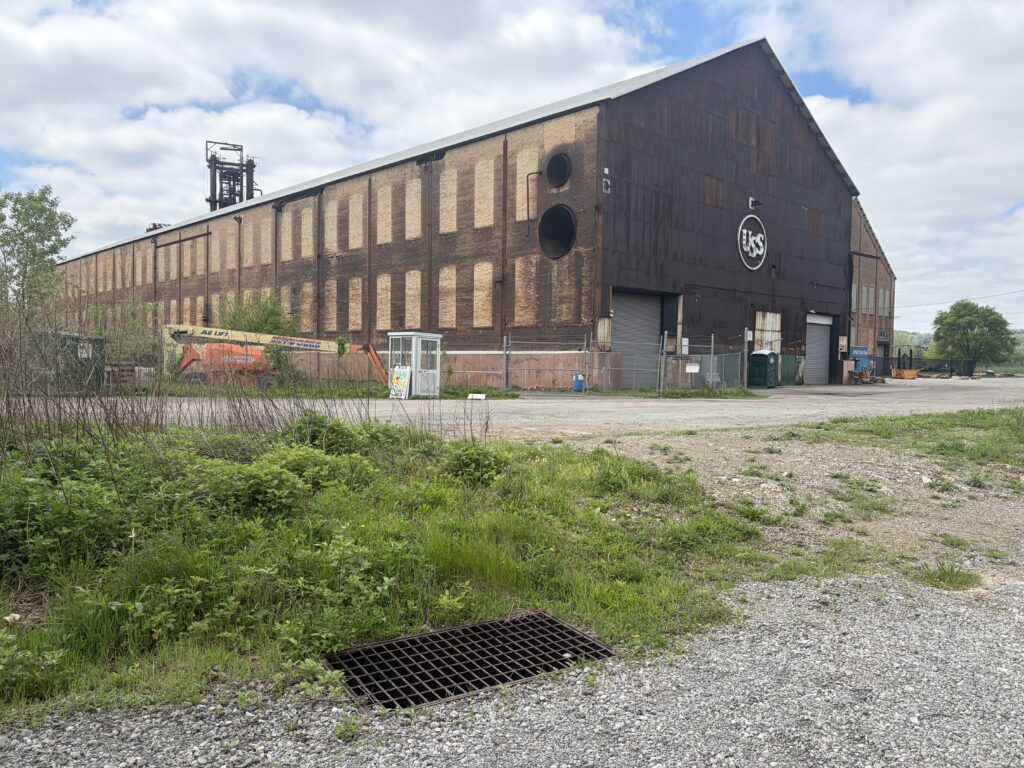
The former United States Steel plant being preserved as Carrie Blast Furnaces National Historic Landmark.
The former “City of Steel” was in full swing steel production for a century (~1870-1970), born in large part due to its proximity to coal, iron ore, and its three rivers providing transportation. Its role as a leader in industrialized America, supporting multiple war efforts and wealth creation is well known. Also well known is the collapse that occurred after international competition shut down the heyday. Some of the former industrial and warehouse sites have now been converted to techhubs and living spaces, keeping some of their historic elements, but at least one it appears, with much effort, will be preserved as Carrie Blast Furnaces National Historic Landmark. This quick stop made me hope that there will be funding and energy for more of this type of preservation.
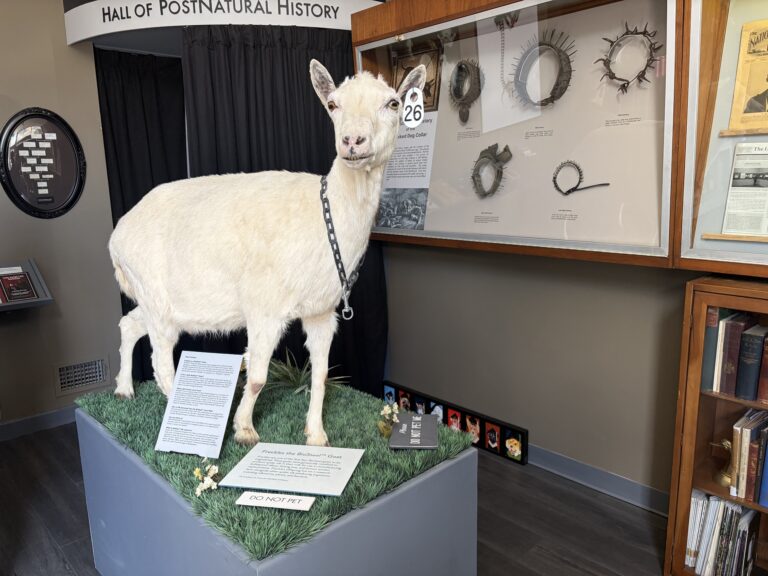
For this Pittsburgh update with Jono, there were a few other gems. The Center for PostNatural History founded by Richard Pell, an associate professor of Electronic and Time-based Arts at Carnegie Mellon University, is a surreal and wonderfully displayed storefront museum of examples of how humans have altered nature to create new species and genetic alterations, “new nature” as it were. A cross between Ripley’s Believe It or Not and a natural history museum, all done in a sophisticated, neutral, and fact based manner that promotes reflection–I highly recommend a visit. (Photo of what greets you at the entranceway above.)
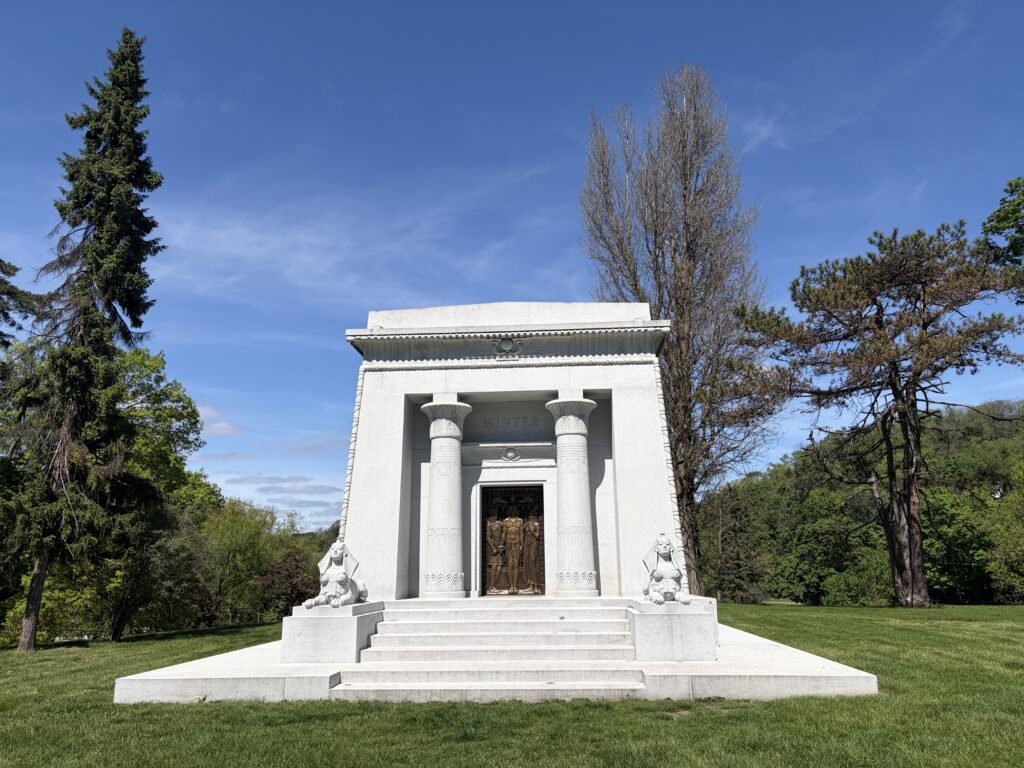
Yes, this is an Egyptian-style cemetery shrine with booby sphinxes.
We also explored the Allegheny cemetery, treated by locals like a park, and filled with obelisk markers and posh shrines, sometimes oddly and humorously reflecting the city’s wealthy departed.
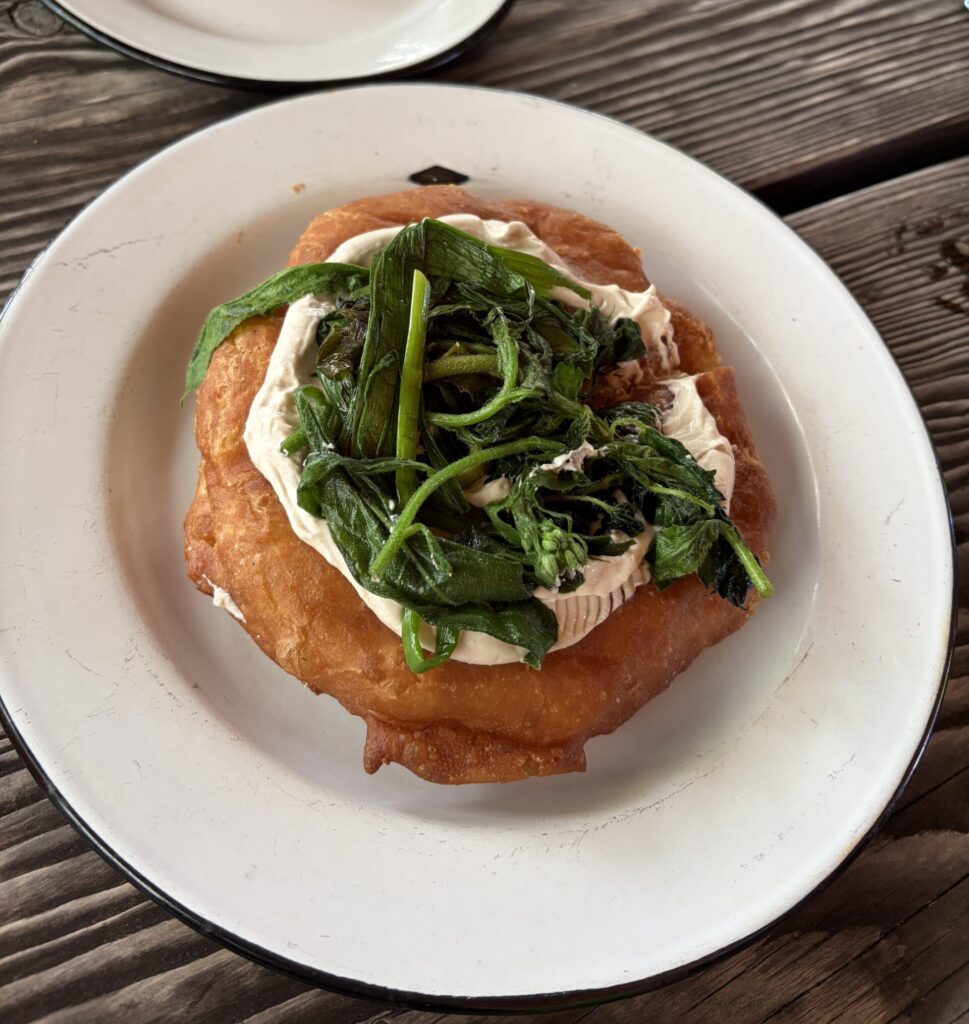
Just one of the great dishes at Apteka: Lángos-Hungarian yeasted fried bread with smoked double fat and wild foraged greens: dames rocket, nettle, ramps and wild garlic.
4:45 pm found us standing in a quickly forming line for Apteka, a wonderfully creative and aesthetically pleasing vegan, Polish food restaurant.
And last, but definitely not least, I got to meet up with a design hero of mine, Terry Irwin. A professor at Carnegie Mellon University and founder of Transition Design, she was also the conference programmer for the 2003 AIGA Power of Design Conference, which focused on sustainability.
I’m not sure about the slogan, “Paris of Appalachia”, but I do think Pittsburgh is a very interesting, evolving and clever city in unexpected ways.