Picasso, move over.
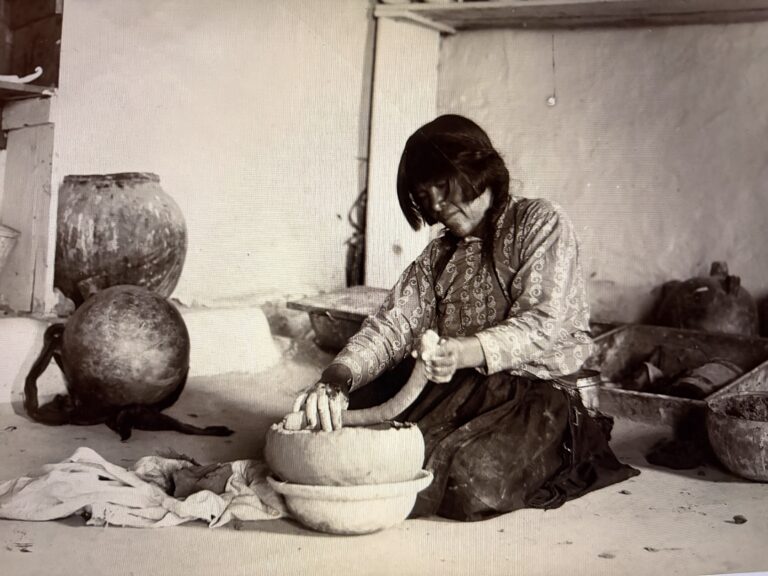
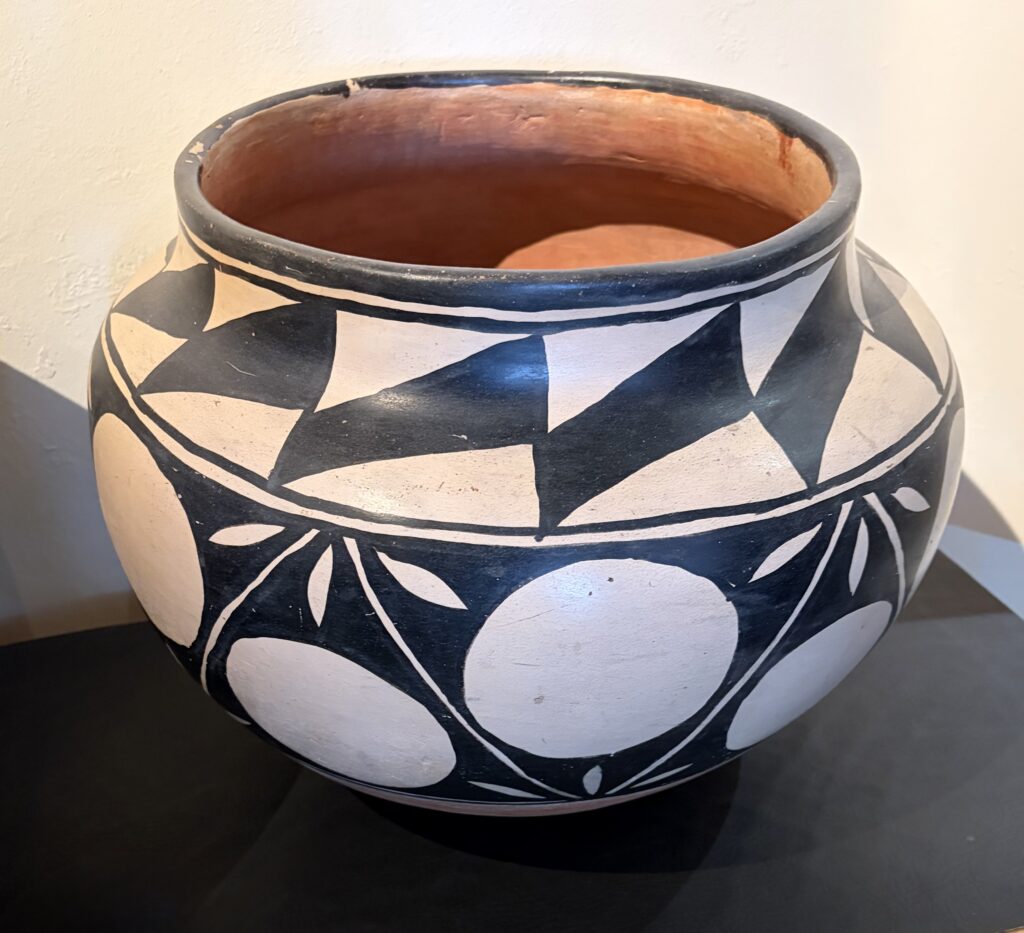
Santa Domingo Pueblo Storage Jar by Monica Silvia, early 20th century
I have fallen in love with the brilliant, traditional, older pottery of New Mexico and the Southwest. Pottery has been part of the Native American culture for millennia. It was made for any number of uses such as making bread dough, cooking in, storing food or water, ceremonial purposes, etc. Different clays local to each tribe were better for some uses than others which created a trading market for pottery.
With function, came artistic expression. Different tribes (~19 still exist in what is now New Mexico alone) had different styles and each maker might also develop their own personal approach. Crafts people did not sign their work, their style was their signature and such artists are now referred to as ‘Artist once known’.
In the early 20th century cubism and abstract art, which directly borrowed from the traditions of indigenous cultures, exploded on the scene. It is ironic that Picasso was considered brilliantly avant garde while the art he was influenced by was called ‘primitive’ (and yes, I still do like Picasso).
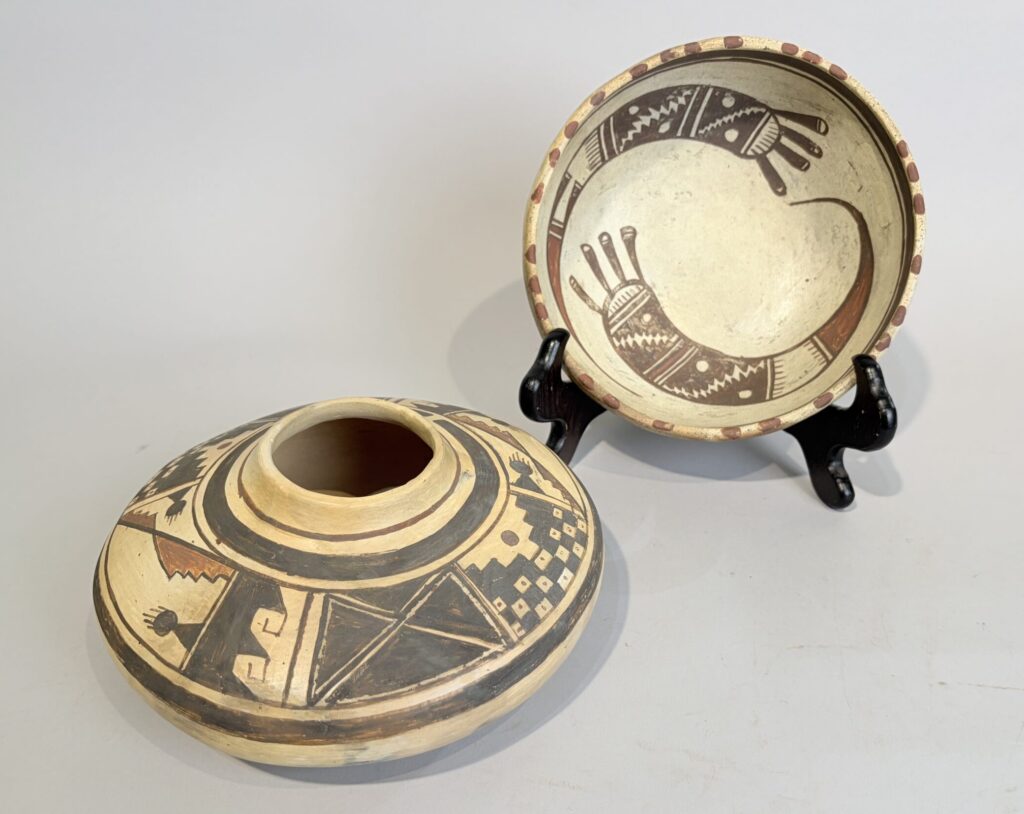
Nampeyo pieces from the Steve Elmore Indian Art gallery in Santa Fe.
A leading native influence in relatively recent times was Nampeyo (1856-1942), a matriarch of modern pottery who is credited with single-handedly reviving the pottery tradition at Hopi pueblo. Nampeyo’s work borrows from ancient designs that were dug up from the ground and which she updated and perfected with her own style. She did this decades before the West ‘discovered’ abstract art (see her picture above), but a century after her Tewa ancestors had been driven from their land in New Mexico and forced to join the Hopi.
These older pieces are truly one of a kinds.
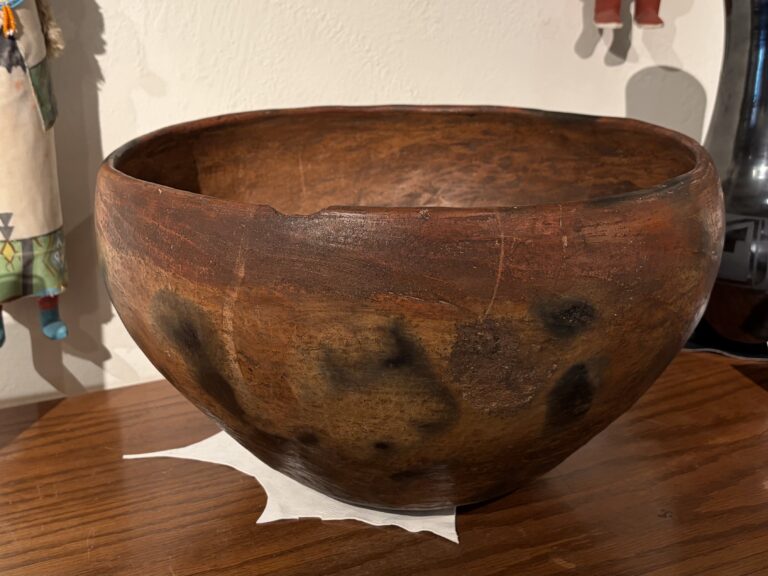
Pre-1879 Isleta Pueblo Dough Bowl with ‘fire clouds’ from Once Known artist (Adobe Gallery)
For the Isleta people, many of the ‘flaws’ of the making process become part of the aesthetic, such as the fire clouds that form on the surface from smoke or ash from the firing process. Add in the patina of many decades of use (I personally couldn’t imagine actually using one of these) and that they just ooze traditions developed over generations and this artistic tradition calls out to my soul.